Canned Motor Pump vs Traditional Circulation Pump: Which One Fits Your System?

Selection Jul 6, 2026 5 min read
Canned Motor Pump vs Traditional Circulation Pump: Which One Fits Your System?

Canned Motor Pump vs Traditional Circulation Pump: Which One Fits Your System?

When buyers search for canned pump vs circulation pump, they are often comparing two different pump structures for the same purpose: moving liquid through a system.

Strictly speaking, a canned motor pump can also be a circulation pump. The real comparison is usually between a canned motor circulation pump and a traditional shaft-sealed circulation pump.

Both can be used in hot water circulation, HVAC systems, heating loops, cooling systems, and commercial buildings. The main difference is how the pump is built, sealed, maintained, and installed.

What Is a Traditional Circulation Pump?

A traditional circulation pump is commonly used to move water or liquid through a closed-loop system. It usually has a motor, shaft, impeller, pump casing, and mechanical seal.

The motor drives the shaft. The shaft drives the impeller. The impeller pushes liquid from the inlet to the outlet. This structure is widely used and suitable for many general applications.

However, because the shaft passes through the pump casing, a mechanical seal is needed to reduce leakage. Over time, this seal may wear and require maintenance.

What Is a Canned Motor Pump?

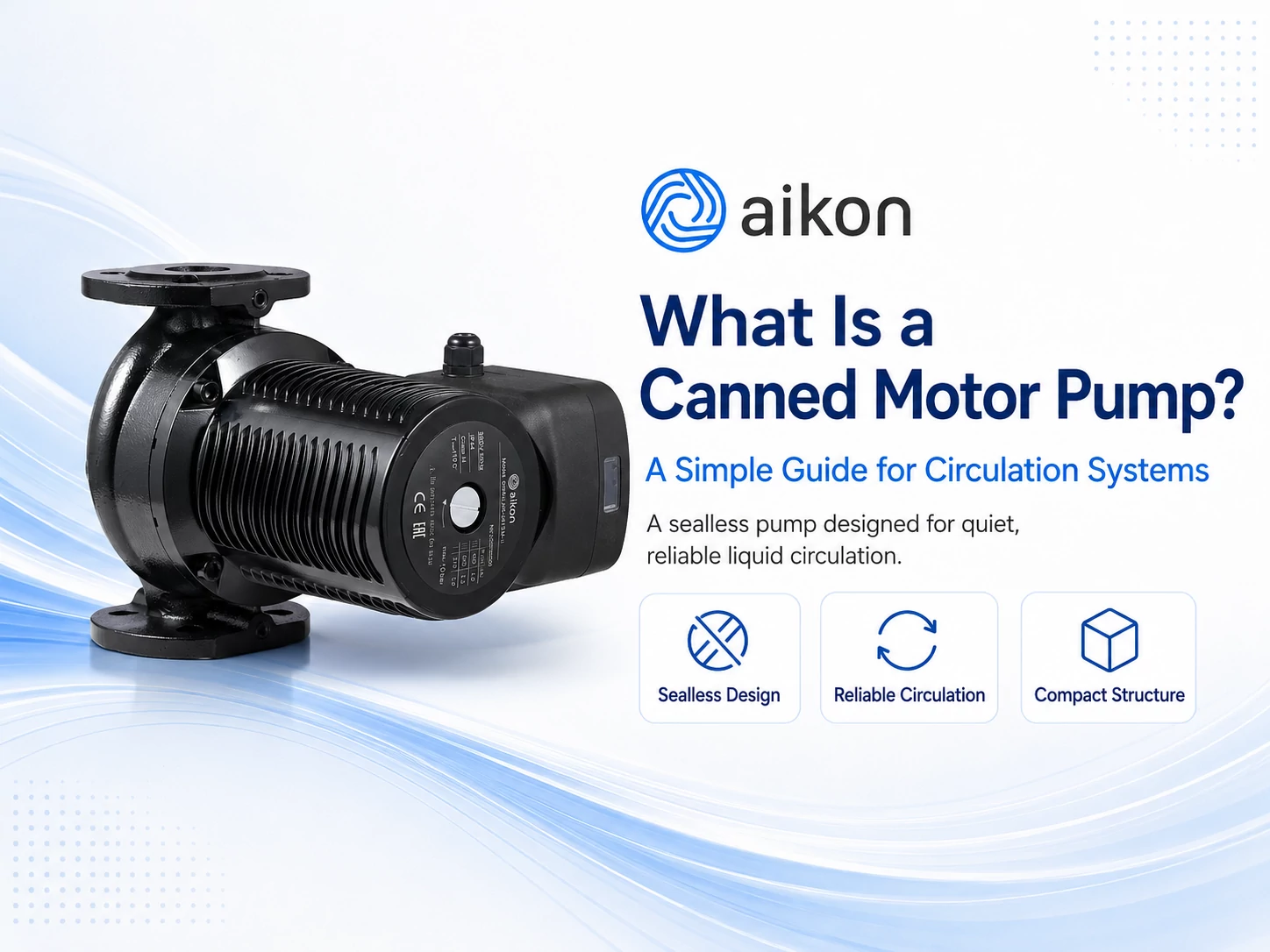
A canned motor pump, also called a canned pump, uses a different structure. The pump and motor are integrated into one sealed unit. The rotor operates inside a sealed area, while the stator is protected by a can or liner.

This design removes the traditional external shaft seal. As a result, a canned motor pump can help reduce leakage risk, maintenance pressure, and noise level in many circulation systems.

Key Difference 1: Leakage Risk

For many projects, leakage is the biggest concern.

In a traditional circulation pump, the mechanical seal is a common leakage point. If the seal wears, the pump may leak, and the system may need service.

A canned motor pump uses a sealless structure. Since there is no traditional external shaft seal, it helps reduce shaft leakage risk. This is especially valuable in hot water circulation, HVAC systems, hotels, apartments, hospitals, and commercial buildings.

If your project requires a cleaner and safer circulation system, a canned motor pump may be the better choice.

Key Difference 2: Maintenance

Traditional circulation pumps may need regular attention to seals, bearings, and leakage points. This does not mean they are unreliable, but they usually have more service-related parts.

Canned motor pumps are designed to reduce maintenance needs. The sealed motor structure and lack of traditional mechanical seal help simplify long-term operation.

For distributors, contractors, and project buyers, less maintenance can mean fewer after-sales problems, lower service cost, and better customer satisfaction.

Key Difference 3: Noise Level

Noise is another important factor in modern buildings.

Traditional circulation pumps can work well, but vibration and mechanical wear may increase noise over time. In hotels, residential buildings, offices, hospitals, and schools, this can affect user comfort.

A canned motor pump usually has a compact integrated structure, which supports low-noise operation and smoother circulation. For applications close to living or working spaces, this advantage can be important.

Key Difference 4: Installation Space

Mechanical rooms and equipment cabinets are often limited in space. Traditional circulation pumps may need more installation room depending on motor structure, shaft design, and service access.

A canned motor pump is usually more compact because the pump and motor are integrated. This makes it suitable for space-saving installation in building circulation systems, heating systems, and equipment packages.

Key Difference 5: Application Fit

Traditional circulation pumps are suitable for many standard water circulation tasks, especially when the budget is sensitive and regular maintenance is acceptable.

Canned motor pumps are more suitable when the project requires:

Reduced leakage risk

Low-noise operation

Less maintenance

Compact installation

Stable long-term circulation

This makes them a strong option for HVAC systems, hot water circulation, floor heating, commercial buildings, and some industrial circulation applications.

Which Pump Should You Choose?

The right pump depends on your system.

If your project is simple, cost-sensitive, and maintenance access is easy, a traditional circulation pump may be enough.

If your project needs leak-free performance, quiet operation, compact installation, and lower maintenance, then a canned motor pump is worth considering.

For B2B buyers, the decision should not only focus on the initial pump price. It should also consider service cost, installation space, noise requirements, and long-term system reliability.

AIKON CMS Canned Motor Pumps for Circulation Systems

AIKON CMS Canned Motor Pumps are designed for circulation projects that require stable operation, low noise, compact structure, and reduced leakage risk.

They can be used in hot water circulation, HVAC systems, heating circulation, commercial building systems, and industrial circulation applications. For distributors, contractors, OEM customers, and project buyers, AIKON can support product selection and bulk supply needs.

FAQ

Is a canned motor pump the same as a circulation pump?

A canned motor pump can be used as a circulation pump. The term “canned motor pump” describes the structure, while “circulation pump” describes the application.

What is the main difference between a canned pump and a traditional circulation pump?

The main difference is the sealing structure. A canned pump uses a sealless motor design, while many traditional circulation pumps use a mechanical seal.

When should I choose a canned motor pump?

Choose a canned motor pump when your system requires low leakage risk, low noise, less maintenance, compact installation, and stable circulation.

Conclusion

The comparison of canned pump vs circulation pump is really a comparison between two pump structures. Traditional circulation pumps are widely used and suitable for many general systems. Canned motor pumps are better suited for projects where leakage risk, noise, maintenance, and installation space matter more.

If you are selecting a pump for HVAC, hot water, heating, or commercial building circulation, AIKON CMS Canned Motor Pumps can provide a practical solution.

Visit the AIKON CMS Canned Motor Pump product page to explore suitable models and send your project requirements for selection support.