Why the Cheapest Circulation Pump Can Become the Most Expensive Part of an HVAC Project

Selection Jul 16, 2026 5 min read
Why the Cheapest Circulation Pump Can Become the Most Expensive Part of an HVAC Project

Why the Cheapest Circulation Pump Can Become the Most Expensive Part of an HVAC Project

When buyers compare circulation pump cost, the first thing they often check is the purchase price.

A cheaper pump looks attractive at the beginning. It helps reduce the project budget and makes the quotation easier to accept. But in an HVAC project, the lowest pump price does not always mean the lowest total cost.

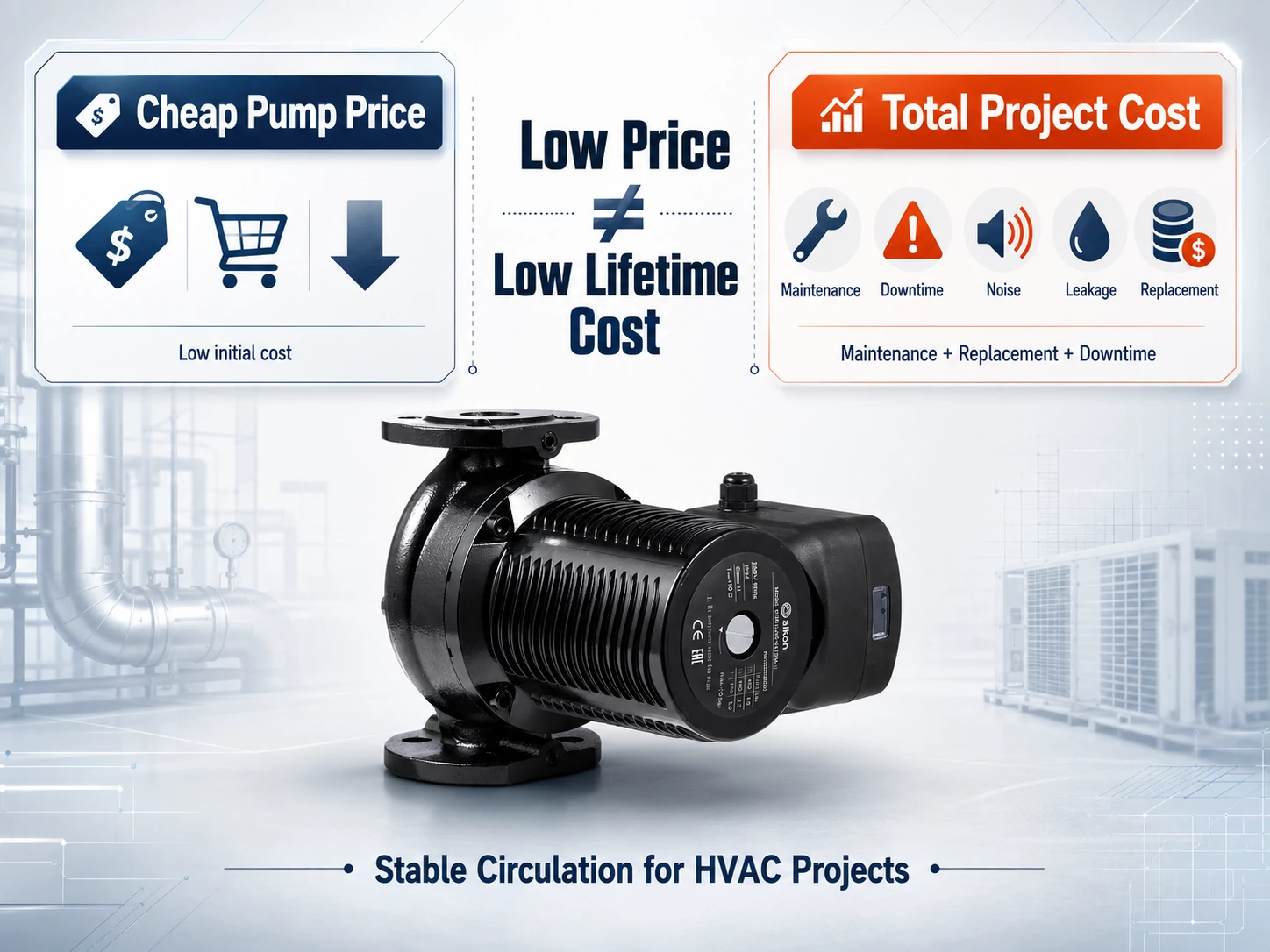
A cheap circulation pump may become expensive later if it causes noise, leakage, unstable operation, frequent service, or early replacement.

For HVAC projects, the better question is not only: “How much does this pump cost?”

The better question is: How much will this pump cost over the life of the system?

The Purchase Price Is Only the First Cost

The pump price is easy to compare. It is clear on the quotation.

But the real cost of a circulation pump includes more than the buying price. It may also include:

Installation cost

Maintenance cost

Pump replacement cost

System downtime

Service visits

Customer complaints

Energy waste

If a pump is cheap but needs frequent service, the total cost can quickly become higher than expected.

For contractors and project buyers, this is important. A low-cost pump may help win the order, but it can also create after-sales problems later.

Cheap Pumps May Increase Maintenance Work

HVAC circulation pumps often run for long hours. In commercial buildings, hotels, hospitals, schools, and apartments, the system may operate every day.

If the pump quality is unstable, small problems can appear over time. These may include leakage, noise, vibration, overheating, or unstable flow.

Each service visit has a cost. Even if the pump itself is not expensive, the labor, travel, inspection, and replacement work can be much more expensive than the original price difference.

This is why pump replacement cost should be considered before choosing the cheapest option.

Pump Failure Can Affect the Whole HVAC System

A circulation pump is a small part of the total HVAC project, but its role is very important.

If the pump fails, the heating or cooling loop may stop working properly. This can affect indoor comfort, equipment operation, and building management.

In a hotel, this may lead to guest complaints.

In an office building, it may affect working conditions.

In a hospital or school, it may create serious operating pressure.

This is why HVAC pump failure cost is not only about replacing the pump. It may also include emergency service, system downtime, and reputation loss.

Noise and Leakage Also Have a Cost

Some pump problems do not stop the system immediately, but they still create cost.

A noisy pump may lead to complaints from users. A leaking pump may damage nearby equipment or make the mechanical room difficult to manage.

In many modern buildings, comfort and reliability matter. If a pump creates noise or leakage, the project owner may lose confidence in the system supplier or contractor.

A better circulation pump can help reduce these risks through stable operation, lower leakage risk, and quieter performance.

Think in Total Cost, Not Unit Price

For HVAC pump selection, price comparison should not stop at the unit price.

A better way is to compare the total cost of ownership. This means looking at how much the pump may cost during installation, operation, maintenance, repair, and replacement.

A pump with a slightly higher purchase price may be more valuable if it can reduce service work, lower failure risk, and operate more reliably over time.

For B2B buyers, this changes the decision from “Which pump is cheaper?” to “Which pump gives better long-term value?”

AIKON CMS Canned Motor Pumps for HVAC Projects

AIKON CMS Canned Motor Pumps are designed for circulation systems that need stable operation, low noise, compact structure, and reduced leakage risk.

For HVAC projects, these features can help contractors, distributors, and project buyers reduce after-sales pressure and improve long-term system reliability.

AIKON supports applications such as HVAC circulation, hot water circulation, heating systems, and commercial building circulation.

FAQ

Why can a cheaper circulation pump cost more over the life of a project?

Because the total cost may include maintenance, replacement, downtime, service visits, noise complaints, and system problems, not only the purchase price.

Should HVAC buyers always avoid cheap circulation pumps?

Not always. But buyers should check whether the pump can meet the project’s requirements for reliability, noise, leakage control, and long-term operation.

What should buyers compare besides pump price?

Buyers should compare performance, material quality, service life, maintenance needs, supplier support, and total ownership cost.

Conclusion

The cheapest circulation pump is not always the most economical choice.

In HVAC projects, a pump affects system comfort, reliability, maintenance cost, and customer satisfaction. A low purchase price may become expensive if it leads to frequent service or early replacement.

Before choosing a circulation pump, compare the total project cost, not only the unit price. Visit the AIKON CMS Canned Motor Pump product page to explore reliable circulation pump solutions for HVAC and building systems.

Product Page:

Products | AIKON Canned Motor Pumps | Canned Motor Pumps for HVAC & Liquid Cooling | AIKON