How Does a Canned Motor Pump Work? A Simple Technical Guide

Technology Jul 17, 2026 8 min read
How Does a Canned Motor Pump Work? A Simple Technical Guide

How Does a Canned Motor Pump Work?

For technical buyers, understanding how a canned motor pump works is important before choosing it for a circulation system. A canned motor pump, also called a canned pump, is designed to move liquid without using a traditional shaft seal. Instead, the pump and motor are built into one sealed structure.

This design helps reduce leakage risk, lower maintenance pressure, and support stable operation in hot water circulation, HVAC systems, heating systems, cooling loops, and commercial building applications.

Although the structure may look different from a traditional pump, the working process is easy to understand.

Basic Working Principle

A canned motor pump is usually based on centrifugal pump operation. The motor creates rotating force. This force drives the impeller. When the impeller rotates, liquid enters the pump inlet, moves toward the impeller, gains energy, and is pushed out through the pump outlet.

In simple words, the motor provides power, the impeller moves the liquid, and the pump body guides the liquid flow.

The main difference is not the way liquid is moved. The key difference is how the motor and pump are connected and sealed.

In a traditional pump, the motor drives the impeller through a shaft, and a mechanical seal is used to stop liquid from leaking around the shaft. In a canned motor pump, the rotor and impeller are placed inside a sealed structure, so there is no traditional external shaft seal.

What Happens Inside the Pump?

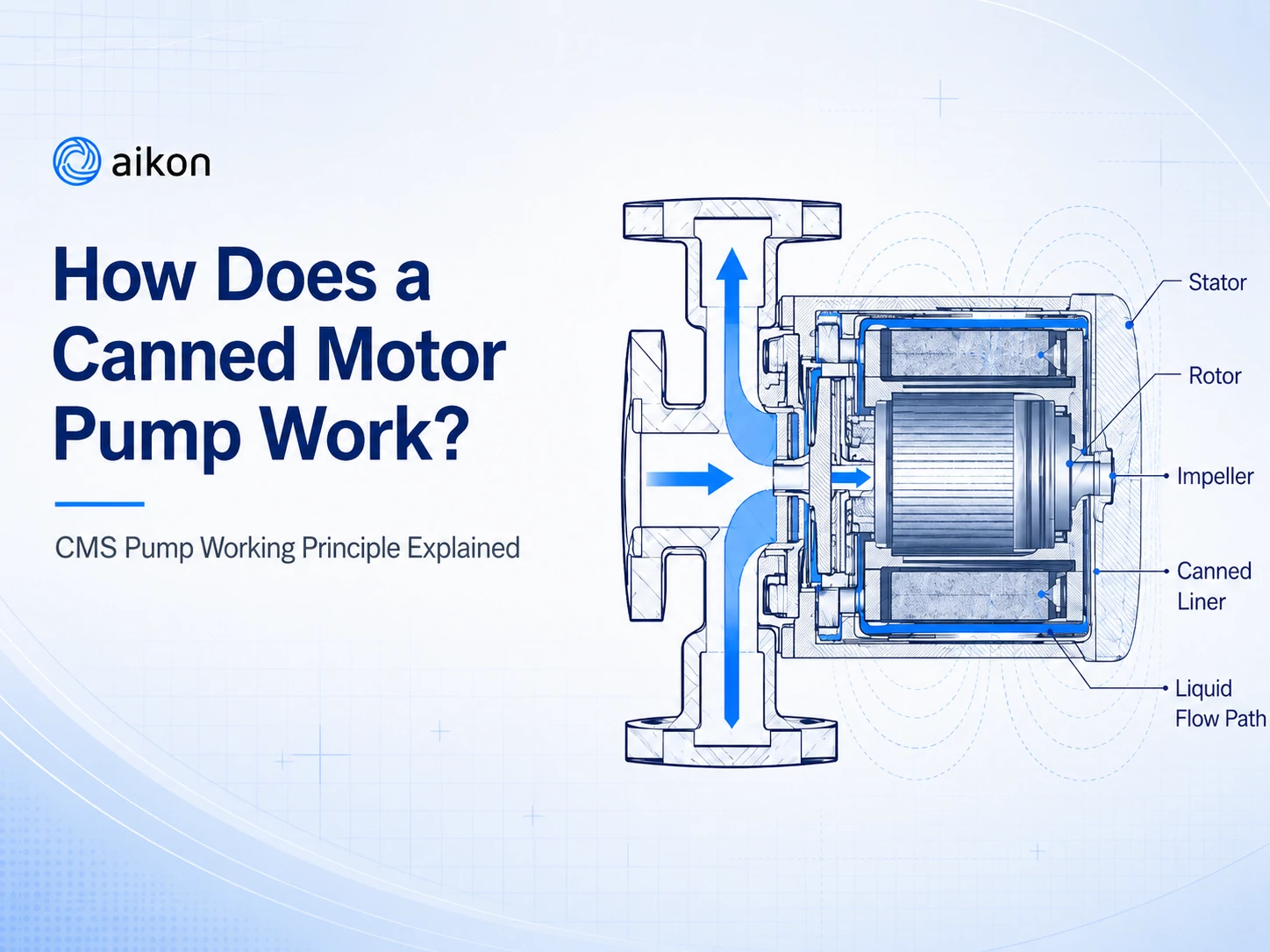
Inside a canned motor pump, the stator and rotor are separated by a thin protective sleeve, often called a can or liner. The stator stays dry and protected, while the rotor operates inside the liquid area.

When electricity is supplied to the motor, the stator creates a magnetic field. This magnetic field drives the rotor to rotate. Since the rotor is connected to the impeller, the impeller also rotates and moves the liquid through the pump.

At the same time, part of the pumped liquid can pass through the internal motor area. This liquid helps cool the motor and lubricate the internal bearings. This is one reason why the liquid quality is important when selecting a canned motor pump.

Why Does It Reduce Leakage Risk?

The biggest technical advantage of a canned motor pump is its sealless structure.

In a traditional pump, the rotating shaft must pass through the pump casing. This creates a possible leakage point. A mechanical seal is used to control this leakage, but seals can wear over time.

A canned motor pump removes this common risk point. The motor and pump are integrated into a sealed unit, and the liquid is kept inside the pump structure. Because there is no traditional external shaft seal, the risk of shaft leakage is greatly reduced.

For systems such as hot water circulation, HVAC loops, and commercial building circulation, this can be very useful. Leakage may lead to equipment damage, maintenance cost, downtime, or customer complaints.

Why Is Liquid Circulation Inside the Motor Important?

In many canned motor pump designs, the pumped liquid is not only moved through the system. It also supports the pump itself.

The liquid can help cool the rotor area and lubricate the internal bearings. This makes the design compact and reduces the need for separate external lubrication.

However, this also means the pump should be selected according to the actual liquid condition. Clean water or similar liquids are usually easier to handle in building circulation systems. If the liquid contains particles, chemicals, or special temperature conditions, the supplier should review the application carefully.

Main Parts of a Canned Motor Pump

A canned motor pump usually includes the pump casing, impeller, rotor, stator, can or liner, shaft, bearings, inlet, and outlet.

The pump casing guides the liquid. The impeller gives energy to the liquid. The rotor rotates inside the sealed area. The stator creates the magnetic field. The can separates the wet rotor area from the dry electrical part of the motor. Bearings support stable rotation.

These parts work together to create a compact, low-leakage, and stable circulation pump.

How It Works in Circulation Systems

In a hot water system, the canned motor pump keeps water moving through the pipeline so users can receive hot water more quickly and consistently.

In an HVAC system, it helps circulate heating or cooling water through the loop. In floor heating, it supports stable water movement to improve indoor comfort. In commercial buildings, it can be used in circulation systems where low noise, compact installation, and long-term operation are important.

For these applications, the pump does not need to be complicated. It needs to be stable, quiet, and reliable.

What Should Technical Buyers Check?

Before choosing a canned motor pump, technical buyers should confirm the application, liquid type, flow rate, head, temperature range, voltage, frequency, installation direction, and working environment.

For example, a hot water system may need higher temperature resistance. An HVAC system may focus on continuous operation and stable flow. A commercial building may require low noise and easy installation.

Correct selection is important because a canned motor pump depends on both pump performance and internal liquid circulation.

AIKON CMS Canned Motor Pumps for Technical Projects

AIKON CMS Canned Motor Pumps are designed for circulation applications that need stable operation, low noise, compact structure, and reduced leakage risk.

For B2B customers in Europe, South America, and other global markets, AIKON supports hot water circulation, HVAC systems, heating circulation, commercial buildings, and industrial circulation projects. Technical buyers can share project parameters with AIKON for product selection support.

FAQ

How canned motor pump works?

A canned motor pump works by using a sealed motor structure. The stator creates a magnetic field, the rotor rotates inside the sealed liquid area, and the impeller moves liquid from the inlet to the outlet.

Does a canned motor pump need a mechanical seal?

No traditional external shaft seal is required. This is one of the main reasons canned motor pumps can reduce leakage risk.

Why is liquid quality important?

Because the liquid may help cool the rotor and lubricate internal bearings. Clean and suitable liquid helps the pump operate more reliably.
Conclusion

A canned motor pump works by combining the motor and pump into one sealed unit. The motor drives the rotor, the rotor drives the impeller, and the impeller moves liquid through the system.

Its sealless structure helps reduce leakage risk, while its compact design supports quiet and stable circulation. For technical buyers working on HVAC, hot water, heating, or commercial building systems, understanding how canned motor pump works can make product selection easier.

Visit the AIKON CMS Canned Motor Pump product page to explore available solutions and send your project requirements for technical selection support.Products | AIKON Canned Motor Pumps | Canned Motor Pumps for HVAC & Liquid Cooling | AIKON