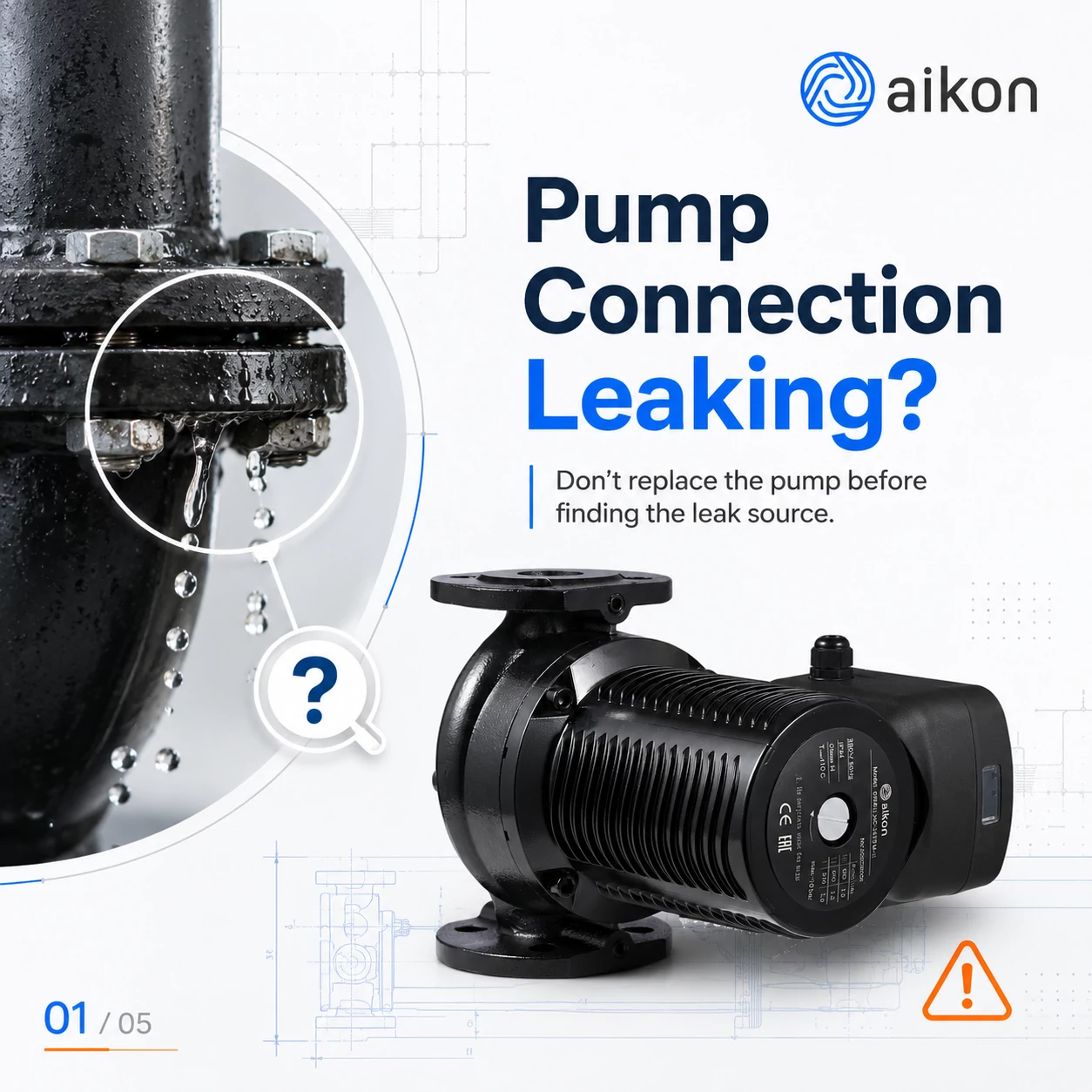
A Leaking Pump Connection: Replace the Pump or Reinstall It?

Category: TroubleshootingPublished: 2026-07-31
A Leaking Pump Connection: Replace the Pump or Reinstall It?

Learn how to diagnose a leaking pump connection and decide whether the pump should be reinstalled or replaced. This article explains connection sealing, pump body leakage, installation stress, pipe alignment, and AIKON CMS pump selection support.

When a circulation pump connection starts leaking, many users immediately think the pump is defective.

But a leaking pump connection does not always mean the pump should be replaced. In many cases, the problem comes from connection sealing, gasket position, thread sealing, pipe alignment, or installation stress.

For installers, distributors, and project buyers, the first step is not to replace the pump immediately. The first step is to find where the water is actually coming from.

Quick Answer

If the leak comes from the pipe connection, union nut, gasket, or thread, the pump may only need to be reinstalled with the correct sealing method. If the leak comes from the pump body, casting, or motor area, the pump may need replacement or supplier inspection. If the leak appears after tightening pipes, check for installation stress or pipe misalignment.

Check the Leak Source First

Not all leaks are the same.

A leak at the inlet or outlet connection usually points to a sealing or installation issue. This may be caused by a damaged gasket, uneven tightening, dirty sealing surface, wrong thread sealant, or poor pipe alignment.

A leak from the pump body is different. If water comes from the casting, pump housing, or an unusual crack, the product should be stopped and checked by the supplier.

A leak caused by installation stress is also common. If the pipe pulls or pushes the pump body, the connection may not seal evenly. The pump may look like it is leaking, but the real issue is that the pipe system is forcing the pump out of position.

Common Causes of Pump Connection Leakage

A pump connection may leak for several practical reasons:


The gasket is missing or damaged

The sealing surface is dirty or uneven

The union nut is too loose or overtightened

The thread sealant is not applied correctly

The pipe is not aligned with the pump connection

The pump is carrying pipe weight or pipe stress

Thermal expansion changes the connection pressure

This is why installers should check the connection carefully before judging the pump quality.

Replace the Pump or Reinstall It?

A simple way to decide is to look at the leak position.

In simple terms, connection leaks often need reinstallation, while body leaks usually need replacement or supplier inspection.

What Installers Should Check Before Reinstalling

Before reinstalling the pump, the installer should shut off the system safely and confirm the system is not under pressure.

Then check:

Connection size and thread type

Gasket condition

Sealing surface cleanliness

Pipe alignment

Pump installation direction

Pipe support

System pressure and temperature

After reinstalling, the system should be refilled, vented, and tested again. A short pressure and operation check can help confirm whether the leak is solved.

AIKON CMS Reference Model for Small Circulation Systems

For small heating, hot water, and light HVAC circulation systems, AIKON CMS(L)25-6T1M-I can be used as a reference model when the project needs a compact DN25 threaded circulation pump.

For this type of threaded pump, correct installation matters. A DN25 threaded connection still needs the right gasket, clean sealing surface, proper tightening, and correct pipe alignment.

The final model should still be confirmed by flow rate, head, pipe size, liquid temperature, voltage, installation length, and system pressure.

How AIKON Helps Reduce Installation and Leakage Risk

AIKON CMS Canned Motor Pumps are designed for circulation systems that require stable operation, low noise, compact structure, and reduced leakage risk.

For B2B customers, AIKON does not only provide the pump itself. AIKON can also support model selection, installation compatibility review, bulk supply, and OEM requirements.

Before ordering, customers can provide flow, head, pipe size, connection type, liquid temperature, voltage, and installation conditions. This helps confirm whether the selected CMS model matches the project.

For distributors, installers, and OEM customers, this is important because many leakage complaints are not caused by the pump body itself, but by wrong connection, poor sealing, or pipe stress during installation.

If a customer reports leakage, AIKON recommends checking the exact leak location first. Photos or short videos of the leak point can help distinguish between connection leakage, pump body leakage, and installation stress.

FAQ

Does a leaking pump connection mean the pump is defective?

Not always. If the leak is at the thread, union, gasket, or pipe joint, it may be an installation or sealing issue.

When should the pump be replaced?

If the leak comes from the pump body, casting, crack, or motor area, the pump should be stopped and checked by the supplier.

How can installers reduce pump connection leakage?

Installers should check gasket condition, thread sealing, pipe alignment, installation direction, pipe support, and system pressure before operation.

Conclusion

A leaking pump connection should not be judged too quickly.

First, identify whether the leak comes from the connection seal, pump body, or installation stress. This helps avoid unnecessary replacement and helps solve the real problem faster.

Visit the AIKON CMS Canned Motor Pump product page to explore circulation pump solutions and send your flow, head, pipe size, and installation requirements for model selection support.

Product Page:

Technical Knowledge Center | AIKON Pumps | Canned Motor Pumps for HVAC & Liquid Cooling | AIKON