Learn why a circulation pump can become noisy even when the pump is not defective. This article explains air, high flow speed, wrong installation, low pressure, blocked filters, oversized selection, and low-noise pump structure.
When a circulation pump becomes noisy, many users quickly think the pump quality is poor.
But in real heating, hot water, and HVAC systems, pump noise does not always come from the pump itself.
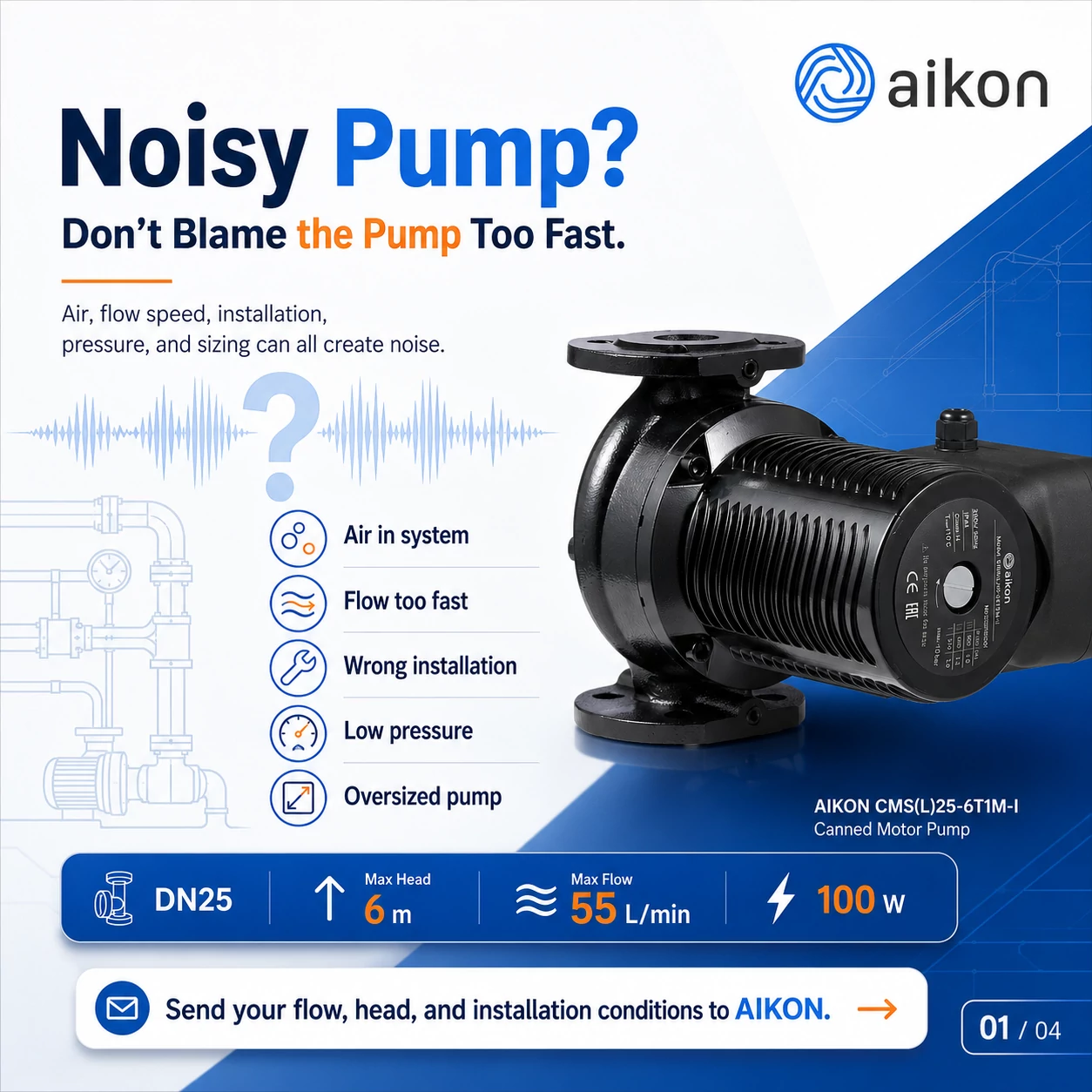
A noisy pump may be caused by air in the system, excessive flow speed, wrong installation direction, low system pressure, poor pipe layout, or oversized pump selection.
For installers and project buyers, this is important: before replacing the pump, check the system first.
Quick Answer
A circulation pump can be noisy even when the pump is not defective. Common causes include trapped air, high flow velocity, wrong installation direction, low inlet pressure, blocked filters, pipe vibration, or a pump that is too large for the system.
Air in the System Can Create Noise
One of the most common reasons for pump noise is air inside the system.
Air bubbles can move through the pump and pipes, creating gurgling, rattling, or unstable running sounds. In some cases, air can also reduce circulation flow.
Before judging the pump quality, installers should check whether the system has been properly filled and vented.
Flow Speed May Be Too High
A pump that is too powerful for the system may create excessive flow speed.
When water moves too fast through pipes, valves, or fittings, it may create noise and vibration. This is common when the pump is oversized or set to a speed that is too high.
In this case, the pump may not be “bad.” It may simply be too large or incorrectly set for the real system demand.
Installation Direction and Position Matter
Pump installation also affects noise.
If the pump is installed in the wrong direction, or if the motor position does not follow the recommended installation requirement, the pump may run with more vibration or abnormal sound.
Pipe stress can also create noise. If the pipes are not aligned well, the pump body may carry extra force from the pipeline.
A good installation should check flow direction, pump position, pipe support, and connection alignment.
Low System Pressure Can Cause Problems
Low system pressure or poor inlet conditions may also create pump noise.
When the pump does not receive enough water, it may create unstable sound and poor circulation. In some systems, this may also increase the risk of cavitation-like noise.
Installers should check whether the system pressure, valves, and filters are normal before replacing the pump.
When Is Pump Quality Actually the Problem?
Pump quality can still be a real reason for noise.
Poor rotor balance, weak bearings, unstable motor quality, rough assembly, or inconsistent production can all make a pump noisy.
This is why low-noise structure, stable production quality, and pre-shipment testing are important for circulation pumps.
For B2B buyers, the best approach is not to blame the pump immediately or ignore the problem. The best approach is to check both the system condition and the pump quality evidence.
AIKON CMS Reference Model for Small Circulation Systems
For small heating, hot water, and light HVAC circulation systems, AIKON CMS(L)25-6T1M-I can be used as a reference model when the project requires a compact DN25 threaded circulation pump.
This model can be considered when the system needs stable circulation, compact installation, low-noise operation, and reduced leakage risk.
However, noise control is not only about choosing a quiet pump. Final selection should still be checked by flow rate, head, pipe length, system resistance, liquid temperature, voltage, and installation conditions.
For larger systems or higher-resistance loops, buyers may need higher-head or larger-size CMS models, such as DN25-8, DN25-12, DN32, or larger options.
How AIKON Helps Reduce Pump Noise Risk
AIKON CMS Canned Motor Pumps are designed for circulation systems that require stable operation, low noise, compact structure, and reduced leakage risk.
For installers, distributors, and project buyers, AIKON does not only provide a pump. AIKON can also support model selection and application matching based on project conditions.
Before ordering, customers can provide flow rate, head, pipe size, liquid temperature, voltage, installation direction, and operating environment. This helps reduce noise caused by wrong pump sizing or poor application matching.
AIKON also supports bulk supply and OEM requirements for customers who need stable product quality and consistent batch performance. For private-label customers and distributors, this is important because noise complaints often become brand complaints.
FAQ
1.Does a noisy circulation pump always mean poor quality?
No. Pump noise may come from air, high flow speed, wrong installation, low system pressure, blocked filters, or oversized pump selection.
2.Should I replace a noisy pump immediately?
Not immediately. First check system air, pressure, valves, filters, installation direction, pipe support, and whether the pump matches the required flow and head.
3.How can buyers reduce pump noise risk?
Buyers should choose a pump based on flow, head, system resistance, installation conditions, and supplier quality control, not only price or pipe size.
Conclusion
A noisy pump does not always mean a bad pump.
Noise may come from the system, the installation, or the pump itself. The right way is to check air, flow speed, installation direction, system pressure, pipe layout, and pump selection.
Visit the AIKON CMS Canned Motor Pump product page to explore low-noise circulation pump solutions and send your flow, head, and installation conditions for model selection support.
Product Page:
Products | AIKON Canned Motor Pumps | Canned Motor Pumps for HVAC & Liquid Cooling | AIKON