Why Canned Pumps Are Used in HVAC Systems: A Practical Guide

Applications Jul 7, 2026 5 min read
Why Canned Pumps Are Used in HVAC Systems: A Practical Guide

Why Canned Pumps Are Used in HVAC Systems

HVAC systems depend on stable water circulation. Whether the system is used for heating, cooling, or temperature control in a commercial building, the pump must keep liquid moving smoothly through the loop.

This is why many projects choose a canned pump for HVAC applications. A canned pump, also called a canned motor pump, combines the motor and pump into one sealed structure. Compared with many traditional circulation pumps, it can help reduce leakage risk, noise, and maintenance pressure.

For hotels, offices, hospitals, apartments, schools, and commercial buildings, these advantages are important for long-term operation and user comfort.

What Does a Pump Do in an HVAC System?

In an HVAC system, the pump moves water or another suitable liquid through heating or cooling loops. The liquid carries heat or cooling energy from one part of the system to another.

In a heating system, warm water may circulate through pipes, heat exchangers, or terminal units. In a cooling system, chilled water may move through the building to help control indoor temperature.

The pump does not need to be complicated, but it must be stable, quiet, reliable, and suitable for continuous operation. If the pump leaks, creates too much noise, or fails during operation, the whole HVAC system may be affected.

Why Leakage Control Matters in HVAC

Leakage is one of the most common concerns in circulation systems.

Many traditional pumps use a mechanical seal around the shaft. This seal helps prevent liquid from leaking, but it can wear over time. Once the seal is damaged, leakage may occur.

A canned pump uses a sealless structure. The rotor works inside a sealed area, and the pump does not rely on a traditional external shaft seal. This helps reduce shaft leakage risk.

For HVAC projects, this is important because leakage can lead to equipment damage, wet mechanical rooms, system downtime, and extra service cost. In commercial buildings, even a small leakage problem may create complaints from property managers or end users.

Low Noise for Modern Buildings

Noise control is another reason canned pumps are used in HVAC systems.

Many HVAC pumps are installed close to occupied spaces, such as offices, hotel rooms, apartments, hospitals, or schools. If the pump creates vibration or noise, users may notice it quickly.

A canned motor pump has a compact integrated structure, which supports low-noise operation and smoother running. This makes it suitable for HVAC systems where comfort is important.

For building projects, quiet circulation is not only a technical benefit. It also improves the experience of the people using the building every day.

Lower Maintenance Pressure

HVAC systems often run for long hours. Some systems operate every day, especially in commercial and public buildings.

For traditional pumps, mechanical seals may need inspection, repair, or replacement after long-term use. This increases maintenance work and after-sales service pressure.

A canned pump reduces this pressure because it does not use a traditional external mechanical seal. With fewer leakage-related service points, it can help simplify long-term operation.

For contractors, distributors, and building operators, less maintenance means fewer service visits, lower operating cost, and better project reliability.

Compact Installation in Mechanical Rooms

Mechanical rooms are often crowded. HVAC projects may include pumps, valves, tanks, pipes, control cabinets, heat exchangers, and other equipment.

Because a canned pump integrates the motor and pump into one compact unit, it supports space-saving installation. This is useful when system designers need a cleaner layout or when installation space is limited.

A compact pump can also help OEM equipment manufacturers and HVAC system integrators design more efficient equipment packages.

Stable Circulation for Heating and Cooling Loops

A good HVAC pump must provide stable circulation. If the flow is unstable, heating or cooling performance may be affected.

Canned pumps can be used in many HVAC-related applications, including:

Heating water circulation

Cooling water circulation

Hot water return systems

Commercial building circulation

Floor heating systems

Heat recovery systems

In these applications, the main job of the pump is clear: keep liquid moving continuously and support stable indoor comfort.

What Should HVAC Buyers Check Before Choosing a Pump?

Before selecting a canned pump for HVAC, buyers should confirm several basic points.

The most important information includes flow rate, head, liquid temperature, power supply, installation space, and operating environment.

For heating systems, temperature resistance may be important. For cooling systems, stable circulation and long operating hours may be the key focus. For hotels and offices, low noise and compact installation may matter more.

Correct selection helps avoid problems after installation and makes the HVAC system more reliable.

AIKON CMS Canned Pumps for HVAC Applications

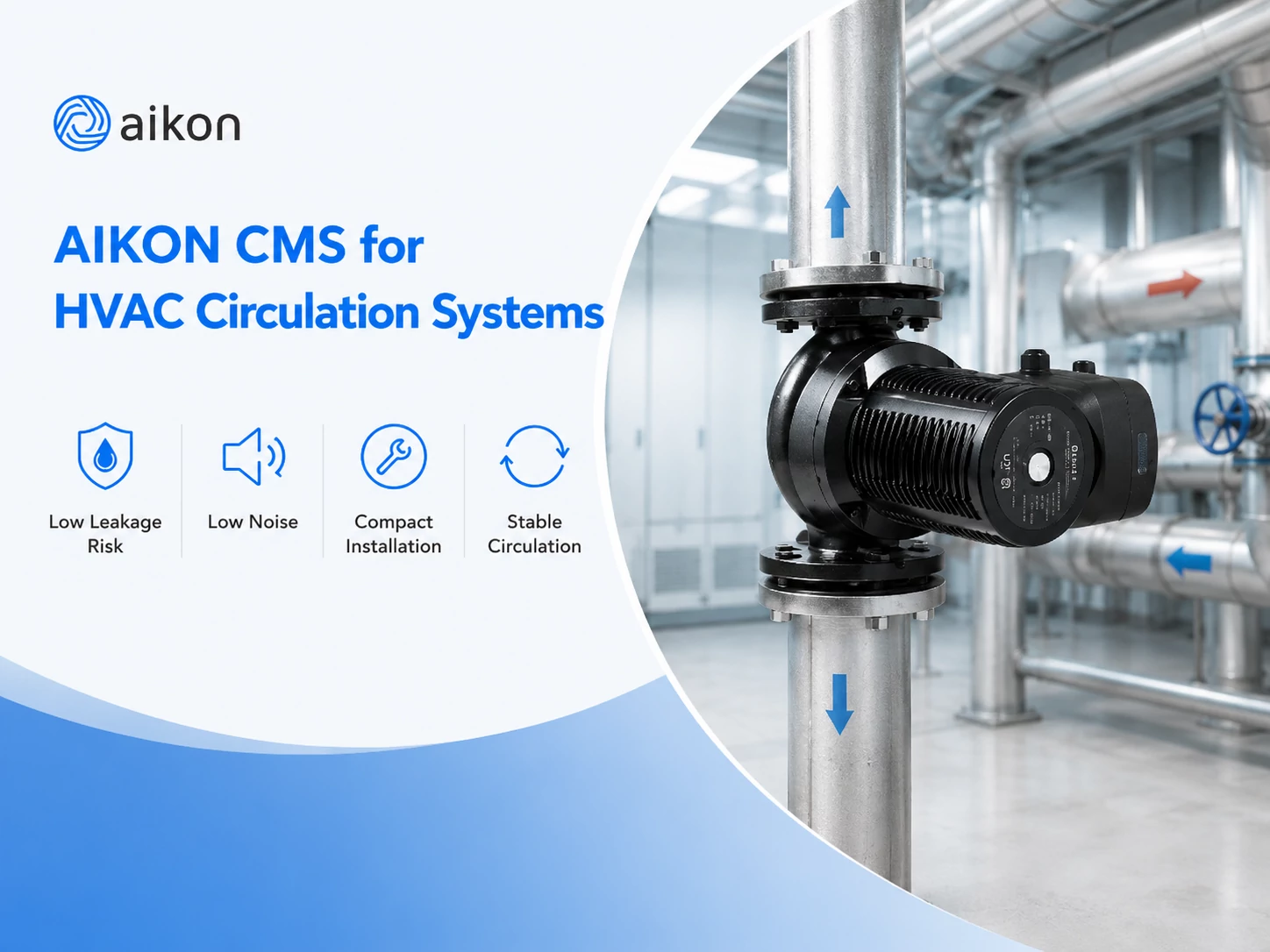
AIKON CMS Canned Motor Pumps are designed for circulation systems that require stable operation, low noise, compact structure, and reduced leakage risk.

For HVAC application customers in Europe, South America, and other global markets, AIKON can support heating circulation, cooling circulation, hot water systems, commercial buildings, and OEM HVAC equipment.

AIKON also supports distributors, contractors, and project buyers with product selection and bulk supply needs.

FAQ

Why are canned pumps used in HVAC systems?

Canned pumps are used in HVAC systems because they help reduce leakage risk, support quiet operation, lower maintenance pressure, and provide stable circulation.

Is a canned pump suitable for both heating and cooling systems?

Yes. A canned pump can be used in many heating and cooling circulation systems, depending on flow rate, head, liquid type, temperature, and installation conditions.

What is the main advantage of a canned pump for HVAC?

The main advantage is its sealless structure, which helps reduce shaft leakage risk and maintenance needs.

Conclusion

A canned pump for HVAC is a practical choice when the system needs stable circulation, low noise, compact installation, and lower leakage risk.

For modern buildings, pump selection is not only about moving water. It is also about long-term reliability, user comfort, service cost, and installation efficiency.

Visit the AIKON CMS Canned Motor Pump product page to explore suitable HVAC circulation solutions and send your project requirements for selection support.

Products | AIKON Canned Motor Pumps | Canned Motor Pumps for HVAC & Liquid Cooling | AIKON